
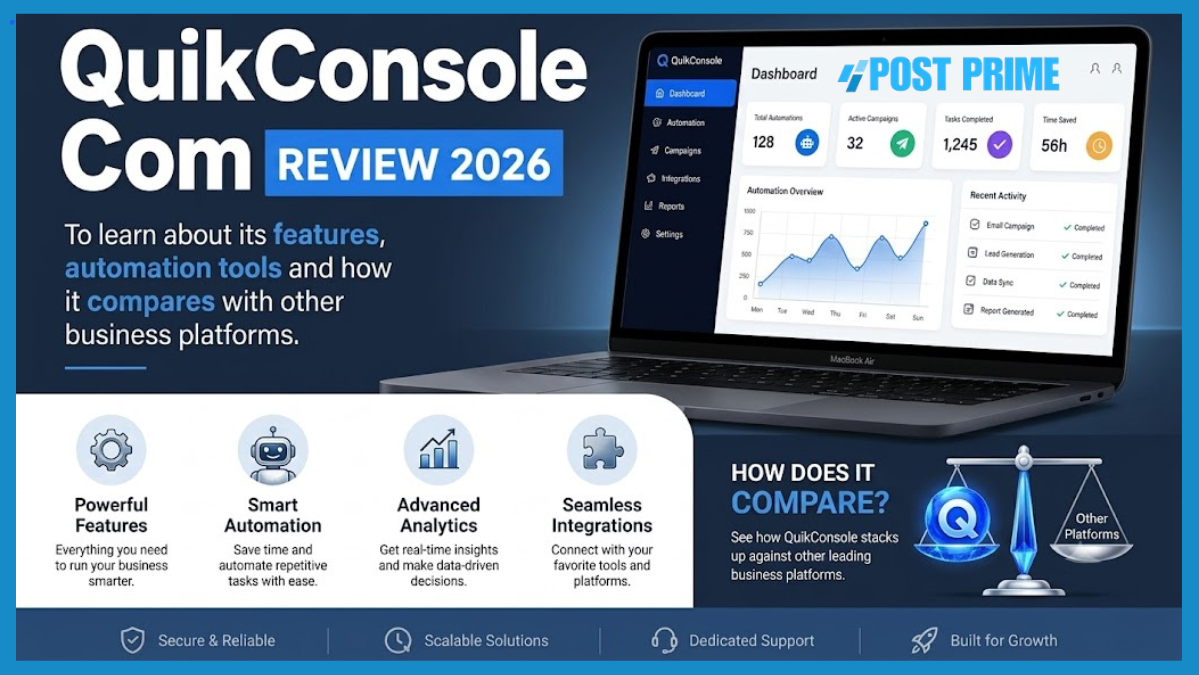
In the fast-moving world of online entertainment and digital platforms, people often discover a website through a short brand name, a search result, or a recommendation. quikconsole com is one such term that attracts attention from users looking for a straightforward online destination. Because a website name alone does not explain what a platform offers, understanding its purpose, interface, accessibility, and overall user experience is more useful than relying on a name or a promotional claim.
This guide takes a practical look at the search term and the type of information users should consider when exploring an unfamiliar website. The goal is not to make unsupported promises, but to provide a clear framework for evaluating a digital platform. From navigation and account access to mobile usability, security awareness, and content quality, each factor can influence whether a site feels reliable and convenient.
Understanding the quikconsole com Search Term
The phrase is commonly approached as a navigational keyword. In simple terms, someone searching it may already have heard about the website and want to locate the correct online destination. That makes accuracy particularly important because similarly named domains, unofficial pages, advertisements, and copied content can sometimes appear in search results.
A useful approach is to treat the search term as a starting point rather than a guarantee of quality. Before using any unfamiliar platform, check the domain spelling, inspect the site’s main navigation, read its available policies, and confirm that the information presented is consistent across pages. A clean interface is helpful, but trust should come from several signals rather than appearance alone.
What Users Typically Look for on a Digital Platform
When people arrive at the site, the first practical concern is usually clarity. Visitors want to understand what the site does, where important sections are located, and how quickly they can reach the information or service they came for. Clear menus, readable buttons, logical categories, and fast-loading pages all reduce friction.
The second concern is consistency. A professional website should make its basic information easy to find instead of hiding important details behind confusing navigation. As a useful rule, “the best online experience is the one that makes the next step obvious.” That principle applies whether a visitor is browsing content, reviewing account information, or learning about available services.
Navigation and User Experience
Good navigation is one of the strongest indicators of a thoughtfully designed website. A visitor should be able to move from the homepage to relevant sections without repeatedly using the back button or guessing which menu item contains a particular feature. Simple labels and a predictable page structure are especially valuable for first-time users.
The website experience should therefore be evaluated from a usability perspective. Look for a responsive menu, readable typography, logical page hierarchy, and links that behave as expected. If pages contain excessive pop-ups, misleading buttons, or unnecessary redirects, that can make even a useful service feel frustrating. A polished interface should support the user’s goal rather than compete with it.
Account Access and Registration Considerations
If a platform provides account-based services, registration and login should be handled with care. Users should understand what information is requested, why it is needed, and how account details are protected. A trustworthy registration process normally provides clear terms, privacy information, and an easy way to recover access when appropriate.
For anyone using the platform or another unfamiliar service, basic account hygiene remains important. Use a strong, unique password, avoid sharing login details, and review the address bar before entering sensitive information. If a site unexpectedly requests excessive personal information or directs users to an unfamiliar domain during login, pause and verify the destination before continuing.
Mobile Compatibility and Accessibility
Modern visitors expect websites to work comfortably on smartphones as well as desktop computers. A responsive layout should resize text, menus, images, and interactive elements without forcing users to zoom or scroll horizontally. Touch-friendly controls also matter because small buttons can be difficult to use on a phone.
Accessibility is equally important. Useful features include readable contrast, descriptive labels, sensible heading structures, keyboard-friendly navigation, and content that remains understandable when displayed on smaller screens. When the site is viewed from a mobile device, these details can make the difference between a smooth session and a frustrating one.
Content Quality and Information Clarity
A strong website does more than fill pages with keywords. Its content should provide meaningful information, use straightforward language, and avoid exaggerated claims. Visitors benefit from pages that explain services, policies, account procedures, and important terms in a way that does not require specialist knowledge.
For content connected with the platform, readers should pay attention to freshness and consistency. Dates, contact details, policies, and service descriptions should not contradict one another. Helpful content answers practical concerns before they become problems, while vague copy often leaves users uncertain about what they are actually agreeing to or receiving.
Security Signals Worth Checking
Website security deserves attention whenever personal information, passwords, payments, or account activity are involved. The presence of HTTPS is an important baseline because it encrypts information sent between a browser and a website, although HTTPS by itself does not prove that a company or platform is trustworthy.
When reviewing the website, users should also consider the domain spelling, privacy policy, terms of service, contact information, and behavior of external links. Be cautious if a page suddenly redirects to unrelated domains, displays aggressive download prompts, or creates urgency around entering payment details. Security is best evaluated through a collection of signals rather than one visual indicator.
| Evaluation area | What to check | Why it matters |
|---|---|---|
| Domain accuracy | Correct spelling and address | Helps avoid imitation or misleading pages |
| HTTPS | Secure browser connection | Protects data during transmission |
| Privacy policy | Clear explanation of data use | Shows how personal information is handled |
| Navigation | Logical menus and working links | Improves usability and confidence |
| Mobile design | Responsive layout and controls | Supports smartphone visitors |
| Contact details | Clear support or business information | Makes assistance easier to obtain |
| Terms | Understandable rules and conditions | Helps users know their responsibilities |
| Page quality | Accurate, current, useful content | Builds credibility and reduces confusion |
Search Visibility and SEO Relevance
From an SEO perspective, a branded search for the domain behaves differently from a broad informational keyword. Search engines attempt to understand whether users are looking for a specific website, a company, a service, or general information. Strong branded visibility therefore depends on consistent naming, accurate page titles, useful content, technical accessibility, and a clear site structure.
Related semantic terms can strengthen topical relevance when they are used naturally. Examples include online platform, website navigation, account access, user experience, mobile compatibility, website security, privacy policy, digital services, login page, and customer support. These terms should support the subject rather than being inserted mechanically. Search optimization works best when content genuinely helps the person behind the query.
Common Benefits of a Well-Designed Online Platform
A well-structured website can save users time by placing important information where they expect to find it. Fast navigation, concise explanations, responsive pages, and consistent branding all contribute to a smoother experience. These qualities also make it easier for returning visitors to complete familiar tasks without relearning the interface.
Another advantage is transparency. Clear terms, accessible support information, and understandable privacy practices help users make informed decisions. In this context, evaluating these practical benefits is more valuable than judging the platform solely by visual design or search-engine position.
Potential Issues Users Should Watch For
No website should be considered reliable simply because it appears in a search engine. Search results can include sponsored placements, third-party references, old pages, mirrors, and domains with similar names. Users should verify that they are interacting with the intended website before sharing credentials or other sensitive details.
Warning signs can include broken navigation, inconsistent branding, unexplained redirects, suspicious downloads, unrealistic promises, and requests for unnecessary personal data. These issues do not automatically prove malicious activity, but they justify additional caution. A few minutes spent checking a site’s policies and domain can prevent avoidable problems later.
How to Evaluate the Website Before Regular Use
A sensible evaluation can begin with the homepage. Identify what the platform is designed to provide, then locate the About, Terms, Privacy, Contact, and support-related information if those sections are available. Pay attention to whether the language is consistent and whether important details are presented openly.
Next, test the basic experience without rushing into sensitive actions. Check whether pages load normally, whether links lead to expected destinations, and whether the mobile version remains usable. When assessing the site, this measured approach gives users a better understanding of the site before they commit personal information or spend money.
Privacy and Personal Data Awareness
Privacy has become a central part of online decision-making. Users should know what information a website collects, whether cookies or similar technologies are used, and how account information may be stored or shared. A privacy policy should be readable enough for an ordinary visitor to understand the main practices without needing legal expertise.
For visitors, it is wise to provide only information that is genuinely necessary for the service being used. Avoid sending passwords, identity documents, or financial information through informal channels unless the platform clearly explains a secure process. Good privacy habits are useful on every website, regardless of how familiar its name may seem.
Customer Support and Trust
Accessible support can reveal a lot about a platform’s commitment to users. Clear contact methods, useful help content, and reasonable explanations of common problems can turn a confusing experience into a manageable one. A site does not need dozens of support channels, but the available method should be easy to find and functional.
Trust also grows when a platform communicates limitations honestly. Statements that acknowledge service boundaries are often more credible than sweeping promises. If the platform provides support resources, users should review them before assuming that every issue can be resolved instantly. Clear expectations help both visitors and service providers.
Why Simplicity Matters for Long-Term Usability
A website can have many features and still be difficult to use. Complexity becomes a problem when visitors cannot tell which tools matter or where to begin. Simple navigation, focused pages, and consistent controls usually create a better experience than a crowded interface filled with competing calls to action.
This is especially relevant when users return to the platform repeatedly. Familiar layouts reduce cognitive effort, while predictable menus make routine actions faster. Long-term usability is not about adding more features; it is about making useful features easier to discover and operate.
Practical Tips for a Better Browsing Experience
Keep your browser and operating system updated, use reputable security software, and avoid entering credentials on devices you do not control. When visiting the site, confirm the domain before logging in and be cautious with links received through unsolicited messages. These simple habits reduce common risks without making normal browsing unnecessarily complicated.
It is also helpful to separate convenience from trust. A fast page is convenient, but speed does not establish legitimacy. A modern design looks professional, but design alone does not verify ownership. Combining technical checks, transparent policies, and sensible personal security practices provides a much stronger basis for making an informed decision.
The Role of Search Engines in Finding the Right Website
Search engines are useful for discovery, but users should distinguish between search visibility and official status. A result appearing near the top does not necessarily mean it is the original website. Domain spelling, page context, and the destination shown when hovering over a link can all help confirm where a result leads.
For branded searches involving the domain, this distinction is particularly important because users may encounter pages discussing the domain rather than the domain itself. Reading snippets carefully and checking the actual destination can prevent confusion. When possible, save a verified official address rather than relying on a random search result every time.
Final Thoughts on quikconsole com
The most useful way to approach quikconsole com is as a website that deserves the same thoughtful evaluation applied to any online platform. Navigation, mobile performance, content quality, privacy practices, security signals, and support resources all contribute to the overall experience. None of these factors should be viewed in isolation, and no single visual feature can replace careful judgment.
A strong digital platform should make information easy to understand, routine actions simple to complete, and important policies easy to locate. By checking the domain carefully, protecting account credentials, reading relevant terms, and paying attention to unusual behavior, users can browse more confidently. The broader lesson is straightforward: convenience matters, but transparency and responsible online habits matter just as much.
FAQ
What is quikconsole com?
quikconsole com is a search term associated with a specific web domain or online platform. Because a domain name by itself does not establish what a site offers or how trustworthy it is, visitors should verify the exact address and review the website’s available information before using account or payment features.
The most useful interpretation is simply that the term points users toward a particular online destination. Its exact services, policies, and features should be confirmed on the current website rather than assumed from the domain name.
Is quikconsole com safe to use?
Safety cannot be determined from a domain name alone. Visitors should check for HTTPS, accurate domain spelling, clear privacy and terms pages, consistent branding, sensible contact information, and the absence of suspicious redirects or downloads. These checks provide a more reliable basis for assessing an unfamiliar website. For quikconsole com, the same principle applies: verify the destination and review the site’s policies before using sensitive features.
No single security signal proves that a website is completely safe. A combination of transparent policies, sensible technical behavior, and careful browsing habits gives users a stronger basis for judgment.
How should users access quikconsole com?
Users should verify the correct domain before opening the site or entering login information. Avoid clicking unfamiliar links in unsolicited messages, advertisements, or pop-ups. If the address appears inconsistent with the expected domain, close the page and verify the destination through a trusted source. This simple habit is especially useful when a quikconsole com link arrives through a message or unfamiliar search result.
Using a verified bookmark or trusted reference can reduce the chance of visiting an imitation page. The same approach is sensible for any frequently used website.
Does quikconsole com work on mobile devices?
Mobile usability depends on the site’s current design and implementation. A well-designed platform should adapt to different screen sizes, keep buttons easy to tap, and maintain readable text. Visitors can assess these features directly by opening the website on a smartphone and checking whether core pages remain practical to use. A quikconsole com visitor should also confirm that buttons, menus, and important account pages remain easy to operate on a smaller screen.
Poor mobile behavior does not automatically indicate a security problem, but it can make navigation and account management unnecessarily difficult.
What information should users check before registering?
Before registration, users should review the privacy policy, terms of service, account requirements, and available support information. It is sensible to understand what personal data is requested and why it is needed. Avoid providing sensitive information when the purpose or handling process is unclear. Reading these details before registration can also reveal whether the service’s expectations match your needs. Clear policies are easier to evaluate than vague promises.
Taking a few minutes to understand registration requirements can prevent misunderstandings later. Users should always be particularly careful when a registration form requests information that appears unrelated to the service.
Why is website security important?
Website security helps protect account credentials, personal information, and other data exchanged online. HTTPS provides encryption during transmission, while strong passwords and careful domain verification add further protection. Users should also watch for suspicious downloads, unexpected redirects, or urgent requests for sensitive information.
Good security is a layered practice. Keeping software updated, using unique passwords, and checking domains before entering credentials can complement the protections provided by the website itself.
What makes a website trustworthy?
Trust is built through several consistent signals, including transparent policies, accurate information, reliable navigation, sensible security practices, accessible support, and clear communication. A polished appearance can improve usability, but trustworthy behavior and transparency are more meaningful indicators of a responsible online platform.
Consistency matters as well. When policies, contact details, navigation, and service descriptions remain clear and coherent, users have more reason to view the platform as professionally maintained.
You may read also Glorvix Com: A Practical Guide to Its Services, Website, SEO Approach, and Trust Factors