
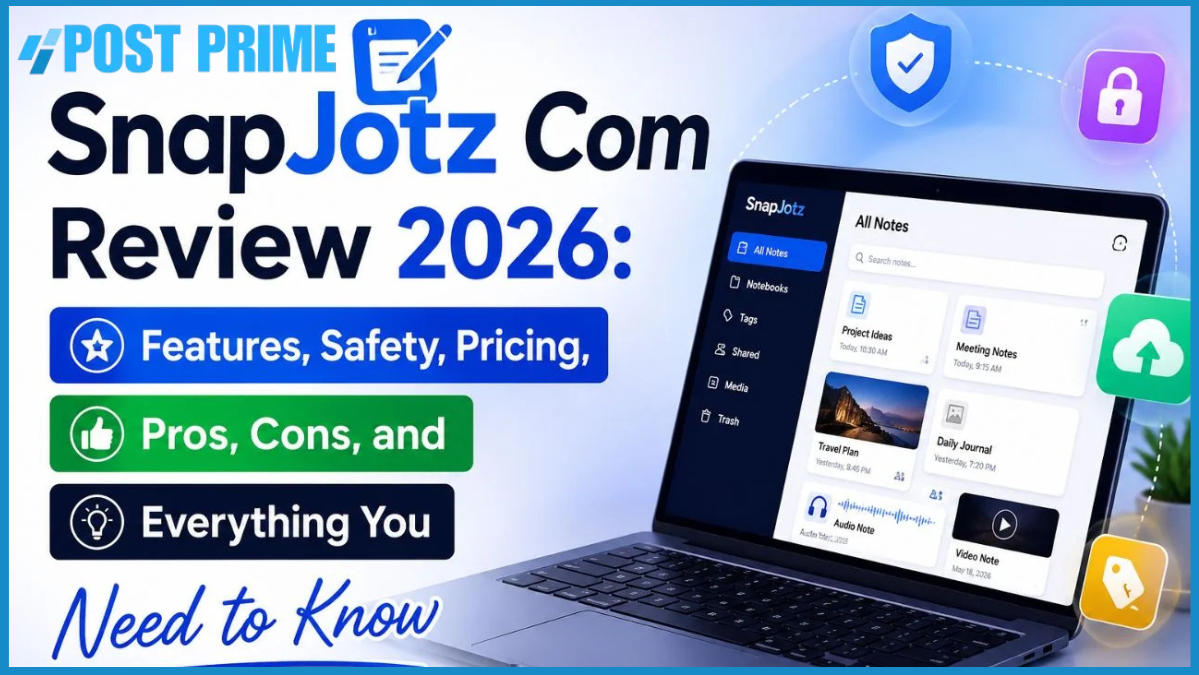
The internet is packed with websites that appear simple at first glance but become more interesting once you look closely. Snapjotz Com is one of those names that has attracted attention because different pages and third-party references describe it in noticeably different ways. Some references associate the name with productivity, digital note-taking, and idea management, while other versions of the brand are presented primarily as publishing or content websites.
That difference matters because knowing what a website actually does is the first step toward using it intelligently. A reader should be able to distinguish between a content platform, a productivity application, an informational blog, and unrelated websites that happen to use a similar name. The current online landscape surrounding Snapjotz makes that distinction particularly useful.
What Snapjotz Com Appears to Be
Snapjotz Com is best understood by looking at the website version and the information presented on its own pages rather than relying on isolated descriptions elsewhere. One active version presents itself as a digital publishing platform focused on articles, ideas, and accessible information. Its About page emphasizes experienced writers, industry knowledge, creativity, authenticity, and community.
At the same time, another site using a very similar identity describes itself as a productivity-focused platform for notes, ideas, content planning, and workflow organization. It specifically mentions quick notes, organized information, smart storage, task management, and content planning. This is an important distinction because similarly branded domains can create confusion about which service a visitor has actually found.
The safest approach is therefore to identify the exact domain before assuming anything about its functionality. A domain ending, page layout, About section, navigation structure, and published content can provide more useful clues than a generic search snippet.
Why the Name Creates Confusion Online
Search results surrounding Snapjotz Com show a surprisingly wide range of descriptions. Some pages call it a general-interest blog, while others describe a note-taking workspace or productivity tool. There are also separate domains using closely related names, which makes it easy for readers to combine information from unrelated websites.
This is not necessarily evidence that something is wrong. Small websites frequently use similar naming patterns, and search engines can surface third-party articles that describe a service differently from its current website. In practical terms, the domain itself should always be treated as the primary reference point.
“Integrity” and “creativity” are among the values highlighted by the SnapJotz About page.
That emphasis is useful because credibility on the modern web is not built through a name alone. Clear ownership information, transparent editorial practices, accurate descriptions, useful content, and consistent branding all contribute to a stronger reader experience.
Content and Topics You May Encounter
The publishing-oriented version of Snapjotz covers a broad collection of subjects rather than concentrating on one narrow industry. Available descriptions and category listings reference areas such as business, education, entertainment, fashion, finance, health, online games, real estate, sports, technology, and other general-interest topics.
A broad content strategy can be useful for casual readers because it creates a single destination for different types of information. Someone researching business ideas may also find educational explainers, technology articles, lifestyle pieces, or entertainment-related material without needing to visit a highly specialized publication for every topic.
The downside is that a multi-topic website needs to work harder to establish expertise. Readers naturally expect deeper authority from a specialist publication. A general website can still provide useful information, but individual articles should make their sources, authorship, context, and limitations clear.
This is particularly important for sensitive subjects such as finance and health. A general article can introduce concepts and point readers toward reliable sources, but important decisions should be based on authoritative professional or institutional guidance rather than one blog post.
Snapjotz Com as a Productivity Concept
The productivity interpretation of Snapjotz Com is worth discussing separately because several websites and articles associate the name with digital note-taking and idea organization. These descriptions present the concept as a workspace where users can capture thoughts, organize notes, manage ideas, and improve their everyday workflow.
The underlying idea is familiar and useful. Modern users often collect information across messaging apps, browser bookmarks, paper notebooks, cloud documents, screenshots, and task managers. A centralized workspace can reduce that fragmentation by giving ideas a consistent place to live.
A good digital note-taking system should make capturing information faster than forgetting it. It should also make retrieval easy enough that users can actually find useful material later. Features such as folders, tags, search, synchronization, sharing, and structured pages can make a major difference, although the availability of these features depends on the specific SnapJotz-related website being accessed.
This is why visitors should avoid assuming that every site using the SnapJotz name offers the same functionality. Some current descriptions clearly position the brand as a content destination, while other pages describe productivity capabilities.
Key Features and User Experience
For a content-focused website, the most important features are straightforward navigation, readable articles, logical categories, mobile compatibility, and useful internal organization. A reader should be able to move from the homepage to a relevant topic without unnecessary friction.
A well-structured article should also answer the visitor’s search intent quickly. Strong introductions, descriptive headings, short paragraphs, relevant examples, and accurate explanations make online content easier to scan. These principles matter whether someone is reading on a phone during a short break or researching a topic on a desktop computer.
For the productivity-oriented interpretation, the desired experience is somewhat different. Users generally expect rapid note capture, organized storage, easy retrieval, and workflow support. The more efficiently a platform handles these basic tasks, the less time users spend managing the tool itself.
The following comparison helps clarify the difference between the two common interpretations found online:
| Aspect | Content Website | Productivity Platform |
|---|---|---|
| Primary purpose | Reading and discovering information | Capturing and organizing information |
| Main activity | Browsing articles | Creating and managing notes |
| Typical audience | General readers | Students, professionals, creators |
| Useful features | Categories, search, articles, archives | Notes, folders, tags, sharing, organization |
| Main success factor | Content quality and credibility | Speed, usability, and organization |
| Key trust signal | Clear authorship and editorial standards | Clear privacy, security, and product information |
The table illustrates why identifying the correct website matters. A visitor looking for articles and a visitor looking for a note-taking tool have completely different expectations.
Is Snapjotz Com Legitimate and Trustworthy?
Legitimacy should be evaluated carefully rather than reduced to a simple yes-or-no label. A functioning website is not automatically an authoritative source, and a relatively new publication is not automatically unsafe. The more useful approach is to examine transparency, technical security, content quality, contact information, authorship, and the type of information the website requests.
A third-party review published in 2026 described the main Snapjotz.com site as an active multi-niche blog and reported that it was accessible without requiring registration for ordinary browsing. The same review also noted limitations around author transparency and editorial information.
Those observations suggest a balanced position. Readers can treat the website as a place to discover general-interest material, but they should still apply normal standards of digital literacy. The presence of HTTPS is helpful for connection security, but it does not by itself prove that every article is accurate or that every external advertisement is trustworthy.
The distinction between website safety and information reliability is especially important. A page can be technically safe to visit while still containing content that deserves independent verification. Responsible browsing means considering both factors.
How to Evaluate Content Quality
Content quality is more than word count. A long article can still be shallow if it repeats the same point without adding evidence or useful context. Conversely, a shorter article can be valuable when it provides accurate information, practical examples, clear explanations, and relevant references.
When evaluating Snapjotz Com articles, readers should look for identifiable authors, recent publication or update dates, specific claims supported by credible sources, and language that separates established facts from opinions. These signals make it easier to judge whether a piece is genuinely informative or primarily designed to attract search traffic.
The same principle applies to SEO content. Search-friendly writing should not mean stuffing a page with keywords. Good search engine optimization starts with satisfying the reader. Clear headings, natural semantic keywords, descriptive metadata, useful tables, concise explanations, and strong topical coverage help both people and search engines understand a page.
A strong article should also avoid exaggerated claims. Statements such as “the best,” “guaranteed,” or “completely safe” need meaningful evidence. Trust grows when publishers acknowledge uncertainty instead of pretending every issue has a simple answer.
Privacy, Security, and Responsible Browsing
Privacy deserves attention whenever a website involves accounts, forms, downloads, advertisements, or external links. Before submitting an email address, phone number, payment information, or other personal data, users should check the site’s privacy policy and understand why that information is being requested.
For ordinary content browsing, the safest habit is simple: read the article, inspect the domain, and avoid unnecessary downloads. Be especially careful with unexpected browser notifications, aggressive advertisements, pop-ups, or links that redirect to unrelated websites.
A third-party review of the main Snapjotz.com domain reported the use of display advertising and advised readers to exercise caution with external advertisements. That does not mean every advertisement is dangerous, but it reinforces a useful rule for all ad-supported websites: distinguish the publisher’s content from third-party promotional material.
Strong passwords, updated browsers, device security tools, and cautious link handling remain valuable regardless of which website someone visits.
Who Can Benefit From the Platform
The content version of Snapjotz can appeal to readers who enjoy browsing across multiple subjects. Students may find educational material, entrepreneurs may explore business topics, and general readers can move between technology, entertainment, lifestyle, and other categories.
Creators and digital professionals may also find value in a broad publishing site when researching ideas or discovering different perspectives. However, information gathered from a general-interest article should be treated as a starting point when the subject requires specialist knowledge.
The productivity interpretation has a different audience. Students can use structured notes for study planning, professionals can organize project information, and creators can keep track of ideas for future articles, videos, campaigns, or social media posts. These use cases align with the note-taking and idea-management descriptions found on several SnapJotz-related pages.
Ultimately, usefulness depends on the exact website and the user’s goal. A reader looking for information needs strong editorial content, while someone seeking a productivity application needs dependable tools and clear product functionality.
Practical Ways to Use Snapjotz Com Effectively
If the goal is reading, start with the site’s category structure and focus on articles that closely match the subject being researched. Avoid judging the entire publication from one article. Read several pieces, compare the quality of their explanations, and check whether important claims are supported by credible sources.
It can also help to pay attention to dates. Technology, finance, online services, and digital trends can change quickly. An article that was useful several years ago may no longer describe the current situation accurately.
If the goal is organization or note-taking, begin with a simple structure rather than creating dozens of categories immediately. A small number of logical folders or topic groups is usually easier to maintain. Consistent naming conventions can also make future retrieval much faster.
One practical productivity principle applies across almost every note-taking environment: capture first, organize second. Spending too much time formatting an idea when it first appears can discourage people from recording it at all. The best system is usually the one that makes useful information easy to capture and even easier to find later.
How Snapjotz Com Compares With General Websites
The biggest difference between a dedicated platform and a broad content website is intent. A specialized productivity service is normally designed around a defined workflow, while a general publication aims to serve readers with different interests.
That distinction affects everything from navigation to feature development. A productivity application may prioritize dashboards, synchronization, collaboration, templates, search, and structured data. A content website instead prioritizes article discovery, category pages, publishing frequency, readability, and search visibility.
There is no universal winner between these approaches because they solve different problems. A reader does not need a sophisticated workspace just to learn about a subject, and a project manager does not necessarily need a large library of unrelated articles to organize a project.
The most important point is to match the service to the task. Understanding that difference prevents disappointment and reduces the risk of trusting descriptions that belong to another website or another version of the brand.
Common Benefits and Potential Limitations
One benefit associated with the broader SnapJotz identity is accessibility. Content platforms are easy to explore, and productivity concepts built around quick note capture are naturally appealing to people who want less friction in their daily workflows.
Another potential benefit is variety. General-interest publishing can expose readers to topics outside their usual interests, while organized digital notes can bring ideas from different projects into one searchable environment.
The limitations are equally worth recognizing. Broad websites may not offer the depth of a specialist publication, and newer platforms may not have the reputation or extensive independent reviews of established services. Online information can also become outdated quickly.
The best response is not to dismiss a newer website automatically, but to evaluate it on evidence. Check who publishes the material, how transparent the organization is, what information is requested, whether claims can be independently verified, and whether the site clearly explains what it provides.
What Makes a Website Worth Returning To
People return to websites when the experience consistently saves them time or provides something genuinely useful. For a content publication, that usually means accurate articles, clear writing, fresh topics, sensible navigation, and enough depth to make a visit worthwhile.
For a productivity platform, return value comes from reliability. If capturing a thought is easy and retrieving it later is effortless, the tool becomes part of a user’s routine. If the interface is confusing or the information is difficult to recover, even an impressive feature list loses its appeal.
A strong digital service also respects its audience. Transparent policies, straightforward explanations, responsible advertising, and accessible contact information all contribute to credibility.
As one current SnapJotz About page puts it, the platform aims to provide “meaningful information” to its audience. That is a useful standard for evaluating any online publication: information should do more than occupy a page; it should help the reader understand, decide, create, or act.
Final Verdict on Snapjotz Com
Snapjotz Com is a name that currently appears across a somewhat confusing collection of online descriptions and similarly branded domains. The strongest takeaway is that readers should verify the exact website they are visiting before relying on claims about its purpose or features. Current evidence shows a content-focused version alongside other websites that describe productivity and note-taking capabilities.
For general browsing, the platform can be approached as an informational resource, with the usual standards applied to any independent website. Check publication dates, assess authorship, verify important claims, and distinguish editorial material from advertisements or third-party links.
For productivity-related searches, extra care is necessary because several unrelated sites make similar claims. Rather than assuming that every feature mentioned online belongs to the same service, identify the exact domain and review its current product information.
In short, the value of Snapjotz depends on which version of the online presence a visitor encounters and what that visitor hopes to accomplish. Careful domain checking, sensible privacy habits, and independent verification turn a confusing search result into a much clearer browsing experience.
Frequently Asked Questions About Snapjotz Com
What is Snapjotz Com?
Snapjotz Com is a name associated with multiple online properties and descriptions. The most clearly documented version presents itself as a general-interest publishing website, while other similarly branded domains describe note-taking and productivity services. Because these properties are not necessarily the same website, checking the exact domain is essential.
Is Snapjotz Com a productivity tool?
Some websites using the SnapJotz name describe productivity features such as digital notes, idea management, content planning, and workflow organization. However, the main publishing-oriented website is presented as a content platform rather than a conventional productivity application. Users should therefore verify the exact domain and product information before assuming a particular feature is available.
Is Snapjotz Com safe to browse?
Normal web-safety precautions are appropriate. A third-party review reported that the main Snapjotz.com site was active and used HTTPS, while also noting third-party advertising. HTTPS helps protect the connection but does not guarantee that every external advertisement or linked website is trustworthy. Visitors should avoid unnecessary downloads and carefully inspect unfamiliar links.
Does Snapjotz Com require an account?
The answer depends on the specific website being referenced. A third-party review of the content-focused Snapjotz.com reported that ordinary browsing did not require registration, while productivity-oriented descriptions suggest that some features on related platforms may involve accounts or synchronization. Checking the exact site’s current terms is the most reliable approach.
Who can benefit from Snapjotz Com?
General readers can benefit from a content-focused version when they want accessible articles covering multiple subjects. Students, professionals, bloggers, and creators may also find productivity-oriented SnapJotz descriptions relevant if they are specifically looking for digital organization or note-taking tools. The appropriate use depends on the exact service behind the domain.
Why are there different descriptions of Snapjotz Com online?
The main reason appears to be the existence of multiple websites and closely related domains using the SnapJotz name. Search results currently include content websites as well as pages describing productivity and note-taking platforms. This makes domain verification particularly important when researching the brand.
How should readers evaluate articles on Snapjotz Com?
Readers should look for clear authorship, publication dates, supporting evidence, transparent editorial information, and claims that can be independently verified. For health, financial, legal, or other high-impact subjects, it is wise to compare information with authoritative sources rather than relying on a single general-interest article.
What is the main advantage of a SnapJotz-style productivity workspace?
The central advantage of a productivity workspace is organization. Bringing notes, ideas, and project information into a consistent system can reduce the time spent searching through scattered documents and apps. The exact capabilities, however, depend on the specific SnapJotz-related platform being used.
Is Snapjotz Com suitable for professional research?
It can be useful as a starting point for discovering general information, but professional research should involve multiple credible sources. A general-interest website may introduce a topic efficiently, while authoritative institutions, academic publications, official documentation, or specialist publications may be more appropriate for verifying important conclusions.
You may read also Glossywise Com: A Practical Guide to the Brand, Website, Features, and Online Experience